HISTORY
Julia-Ann Historic District
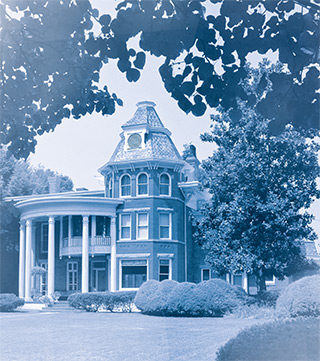
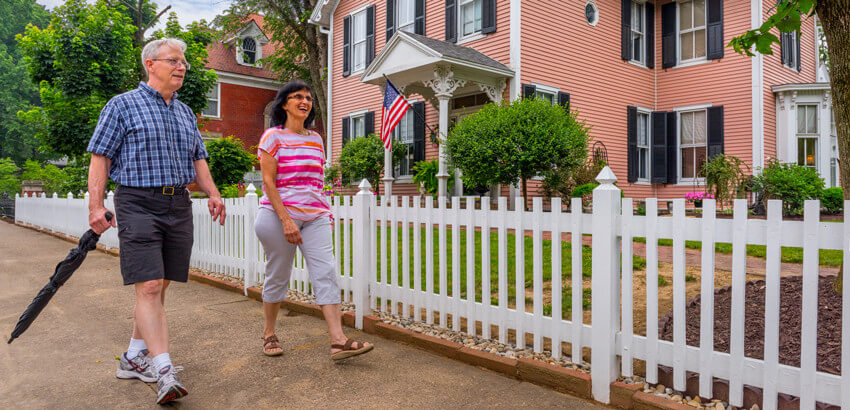
Julia-Ann Square Historic District is the largest and oldest historic district in West Virginia and was an important center in West Virginia’s early history. Homeowners were comprised of leaders from the community including bankers, businessmen, professionals and political figures who had the financial means to construct the best houses of the time. Comprised of approximately 126 homes, the district’s structures are in the Second Empire, 19 century eclectic and Queen Ann styles dating from c. 1850 to 1910.
The Historic Walking Tour of the Julia-Ann Square Historic District features 54 houses, a historic church and one of the area’s first cemeteries. Visitors can pick up a free copy of the walking tour guide at the CVB office.
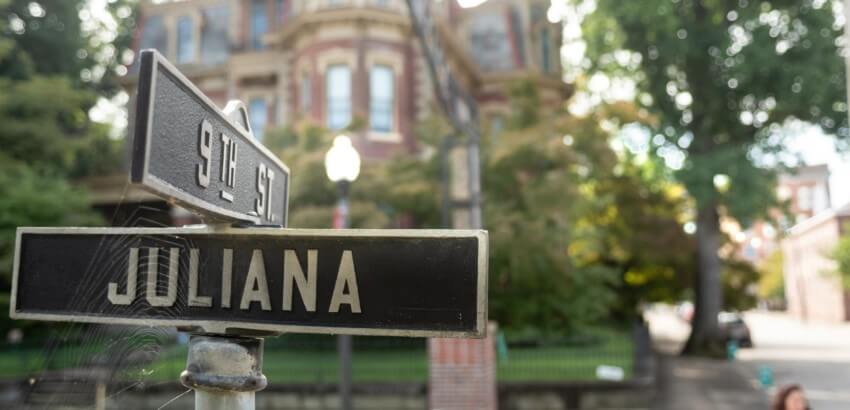
The tour starts at the arch on 9th and Juliana Street.
Please note that the private homes are not open to the public, but we invite you to appreciate their architectural and historical significance. Phone: (304) 422-9861

The Chancellor House
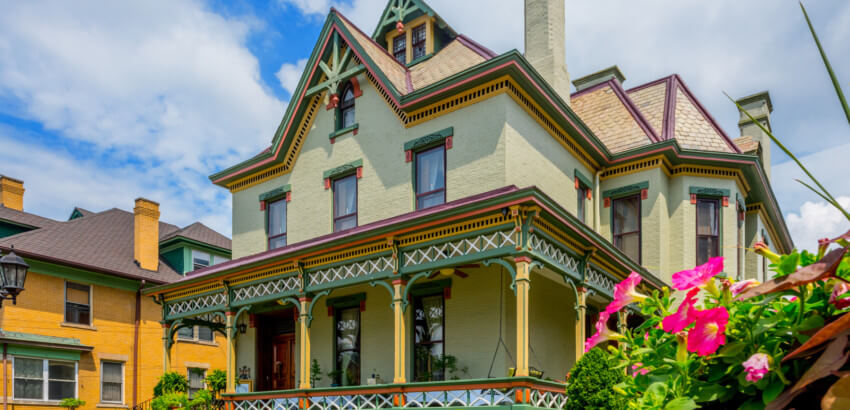
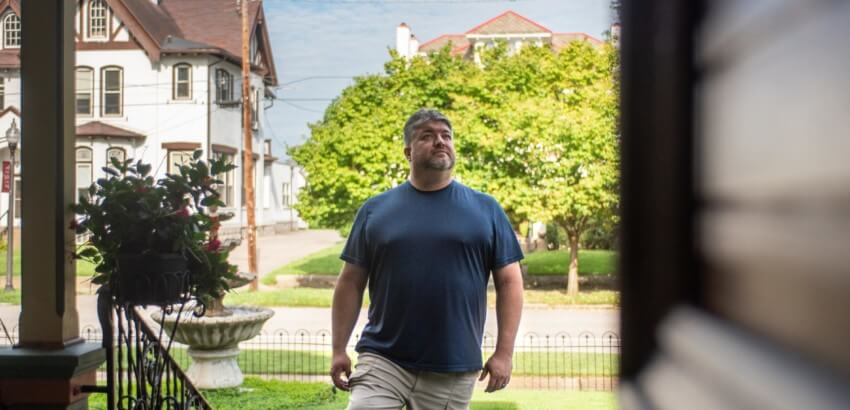
Built in 1878 by William Nelson Chancellor (1830-1908), this Second Empire style mansion illustrated the wealth and prominence Nelson had achieved as a banker, entrepreneur, oil refiner, and real estate developer, including building the Blennerhassett Hotel. His paternal and maternal grandparents had come west from Fauquier County, Virginia. His father, Thomas Chancellor, owned and operated two tanneries in Parkersburg from 1837. Young Nelson became a banker, and through the Stephenson family at Oakland plantation, he met Ellen Charles King from Vicksburg, Mississippi. The couple married in 1855, eventually had six children, and in 1878, moved from their comfortable home on Market Street to the new mansion. Nelson Chancellor was active in politics in the city council, where he served two terms as mayor of Parkersburg, was elected to the West Virginia state legislature, declined his party’s urging to run for governor, but accepted an appointment to chair the state commission for the 1893 Chicago World’s Fair.
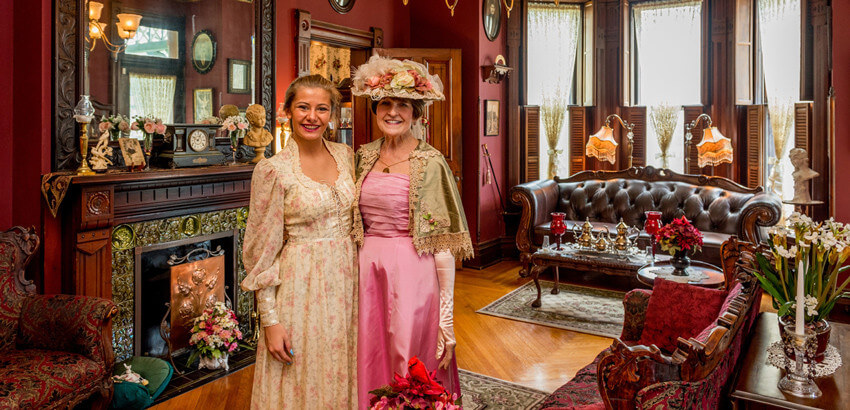
Designed by Cincinnati architect A. C. Nash and constructed by a local carpenter-contractor and his crew, this solid brick house has 6,000 square feet. It contains 15 large rooms, a large main hallway with a 3-story staircase with walnut banister and rails, a 2-story back hallway and from the kitchen to the cook’s bedroom above. The house has 11 mantels and fireplaces which originally burned coal but were converted to gas around 1910.
The spacious formal rooms have 13′ high ceilings, solid walnut 10′ high paneled doors, surrounds, and baseboards with molding, and elaborate plaster cornices and medallions. The formal rooms on the main floor have their original wooden louvered interior shutters. The 4 original mantel pieces are of cast iron or marble. The others are wooden Colonial Revival pieces c. 1910. The original pine floors remain throughout the house. Some of Nelson & Ellen Chancellor’s furniture is in the house, while other pieces were added by the subsequent owners, their daughter Nellie Chancellor Burwell, then by her son Nelson Chancellor Burwell and his wife, and their daughter Eleanor Burwell and her husband Malcolm Jackson Lowe. Their daughter Katherine Lowe Brown is the current owner.
Katherine and her husband, Madison Brown, have worked on restoring the house since 2005. They contracted with Moran Co. of Marietta, OH for complete replacement of all flat roof surfaces and for total restoration of the mansard roof with patterned slate shingles, retaining most but replacing damages ones with period shingles. Madison completely rebuilt and repaired 46 original windows in the house.
 Sign up for our Newsletter
 Group Tour Information
 Read the Latest Blog